

.jpg)
.jpg)
, 2025, Acrylic on linen over panel, 100 x 70 cm.JPG)
 (1).jpg)


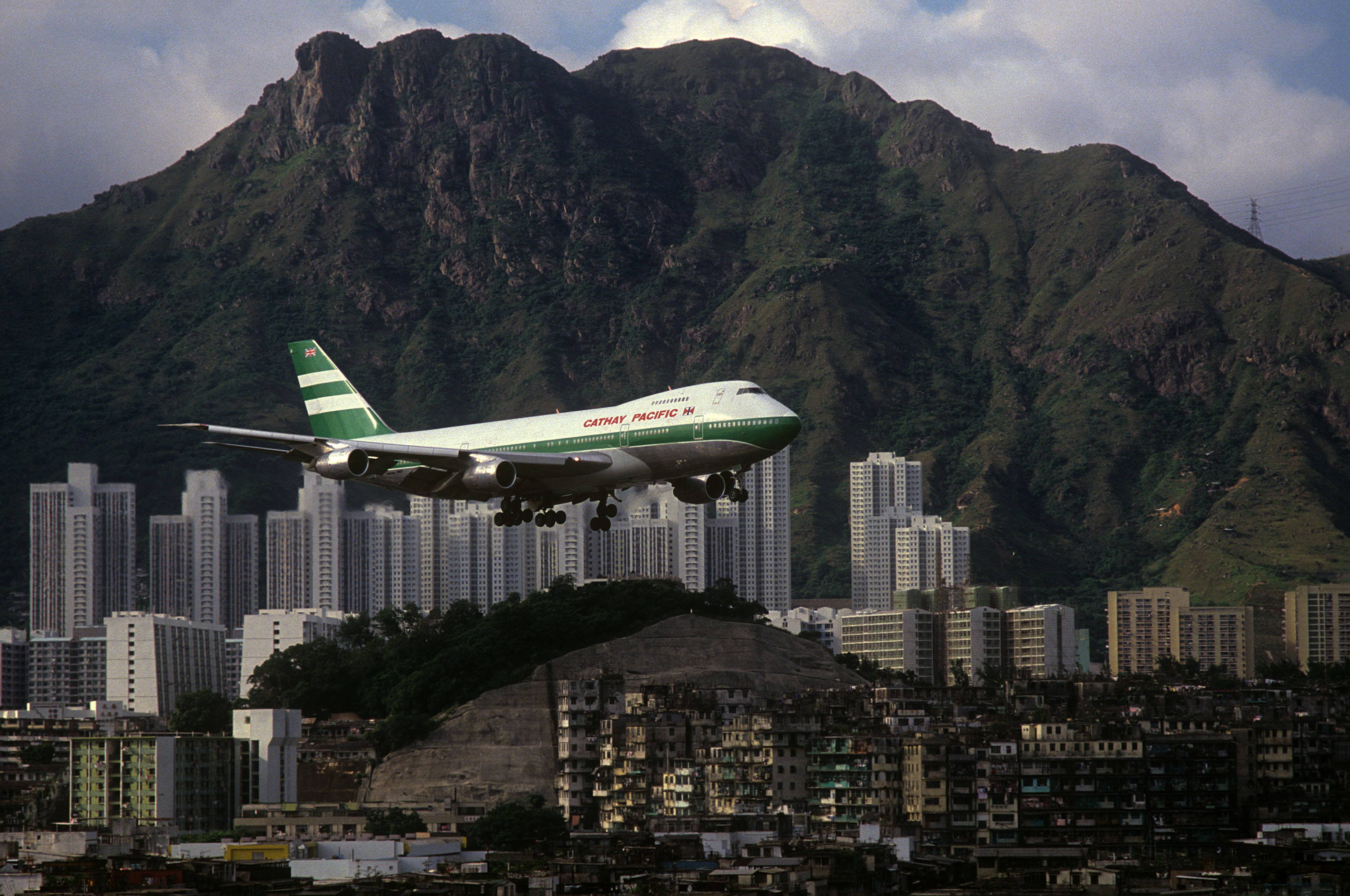
Greg Girard, Cathay Pacific 747 with Lion Rock and Kowloon Walled City. 1989., Printed 2026, Archival pigment print, Edition of 10, (GG_0009). Courtesy of the artist and WKM Gallery.
WKM Gallery is pleased to present “HKG-TYO 1974-2023,” a solo exhibition by Canadian photographer Greg Girard. Known for his intimate, cinematic photos of urban night scenes, cityscapes, and the daily lives of workers and local inhabitants, Girard has come to receive recognition for his tenacious documentation of the social and physical transformations in major East Asian cities over the past four decades. The current exhibition juxtaposes two of Girard’s second homes, Hong Kong and Tokyo, during their respective eras of industrialization and growth; periods that are often looked back on fondly as “golden years”, a time when progress flourished and the future seemed bright. Guided by an undying investigative curiosity and appreciation of the overlooked, Girard’s lush, enchanting, and at times melancholy compositions capture the vulnerability and vitality of two cities in the midst of metamorphoses. His photographs offer a point of access to the euphoria and growing pains that eventually came to shape Hong Kong and Tokyo as we know them today, becoming time capsules that point simultaneously toward the present and the future.
Born in Vancouver in 1955, Girard first began making pictures in his high school years, traveling downtown on the weekends to photograph wherever his feet took him. As his radius of travel expanded, this adventurous approach eventually took him to Hong Kong, Tokyo, and Shanghai; meccas of glitter and grime that were growing faster than pre-Internet media could export to the West. Captivated by the shockingly futuristic cities he encountered— so different from the Japan he saw in the Kurosawa films at his local theater, or the Chinese caricatures depicted in news and pop culture— Girard’s desire to document them led him to spend a majority of his life in East Asia, eventually landing a job as a photojournalist. For many years, Girard’s large trove of personal works remained unknown, but the introduction of the internet has brought belated recognition to what is now a rare archive of East Asian metropolitan life during some of its most transformative decades. In particular, City of Darkness, Girard’s documentation of Hong Kong’s infamous Kowloon Walled City, has gained acclaim as one of the most influential and historically important records of the urban phenomenon.
“HKG-TYO 1974-2023” pairs together, for the first time, Girard’s photographs of Hong Kong and Tokyo from the 70s to the present day. Girard’s first contact with Hong Kong in 1974 sparked an interest which extended to Tokyo in 1976, and he continued to commute between the two for many years following.
The photographs in this exhibition transport us back into the perspective of a dazzled discoverer charting unexplored territory. Girard’s lens often gravitates towards the unremarkable and unglamorous. Dirty alleys and old bars glow with mysterious allure, beckoning us into areas hidden and overlooked. In Shibuya and Shinjuku, endless signs dazzle above the damp pavement; a complement to the car-lined sidewalks of Hong Kong’s bar district. The two sleepless cities share many similarities through the filter of Girard’s gaze, but there are differences too— “Cathay Pacific 747 with Lion Rock and Kowloon Walled City” (1989) depicts a jet plane before a verdant mountain range, the deafening roar of its engines almost audible as it dangerously grazes the tops of beige skyscrapers in a scene that is unmistakably Hong Kong. Situated just in front of the skyscrapers is a ramshackle heap of dilapidated apartments: the dystopian fortress of the Kowloon Walled City, which appears again from ground level in “Kowloon Walled City from SE Corner” (1987). Meanwhile in Tokyo, “Platform Conductor, Ikebukuro” (1976) blasts us with a forceful whoosh of air as a gleaming red subway train speeds by, a neatly dressed station attendant saluting its departure with a spotless white glove in meticulous Japanese style. The newest photographs from his Snack Sakura series, though taken between 2017 and 2025, also relate to this era. The project explores the uniquely Japanese culture of “snacks”, tiny local pubs that flourished in the 70s and 80s and continue to operate in a largely unchanged format today. Often run by an older woman, or “mama-san”, for a community of regulars, snack culture has resisted the commercialization and commodification of the 2000s, turning into a retro reminder of a previous era.
Many of Girard’s photos are taken under the intimate cover of night, depicting quiet moments of solitude through long-exposure shots that reveal the patience of a careful painter. And indeed, Girard’s recognizably vibrant style has a timeless, painting-like quality to it; cinematic, emotional, wistful, even at times romantic. Though his photographs are, by nature of their age, archival, Girard has described his works as being “pictures about now.” “In the 1970s and 80s, I rarely saw photographs that showed the [cities] that I knew and loved... So I tried to make pictures of what they looked and felt like to me,” he says, and this is evident in the capability of his photos to communicate, with vivid intensity, intangible elements like the sounds of buzzing neon or the smell of cigarette smoke on velvet chairs— all of the mundane and invisible details that coalesce to define a cultural era.
This exhibition centers mostly on the transition from the 70s to the 80s, a period marked by Hong Kong’s transformation into an international financial hub, just around the same time that Japan was sprinting headfirst into its decadent bubble era. Through Girard’s lens, the acceleration of these two cosmopolitan centers is depicted with purposeful intent and slow tenderness. There is a synergy between the artist’s curiosity and the ambition of two developing cosmopolises that were once on the cusp of becoming “cyberpunk utopias.” The sincerity and vibrance with which Girard captured these cities point toward a collectively hopeful attitude about the future. And while it is easy to interpret them as a reminder of “the good old days,” Girard’s photos are more than just a trigger for nostalgia— instead, they serve as a prompt for contemplation and an aesthetic experience of nowness; a reminder of what it means to live in the present and look toward the future of the cities we’ll change.
Address: 20/F, Coda Designer Centre, 62 Wong Chuk Hang Road, Wong Chuk Hang
Opening Hours: Tue–Sat 11am–7pm, Closed on Sunday, Monday and Public Holidays
Phone: +852 2866 3199
Email: info@wkm.gallery
Website: wkm.gallery